How to Make a Medical Space Smell Calming
Dental & Doctor Office Scenting: How to Make a Medical Space Smell Calming, Not Clinical
Most medical and dental offices have a smell problem they don't even realize they have: the mix of antiseptic, dental materials, and industrial-strength disinfectant that reads instantly as "clinical" the moment a patient walks in. You can't eliminate those smells entirely - they're part of running a safe, sterile practice - but you can layer a calming, well-diffused fragrance on top that shifts the entire emotional tone of the waiting room from sterile to soothing. That's the real goal of medical and dental office scenting: not masking, but recontextualizing.
Why the "Clinical Smell" Triggers Anxiety Before a Patient Even Sits Down
Smell reaches the brain's emotional centers faster than sight or sound, which means patients register the scent of a waiting room before they've even reached the front desk - and for many people, the antiseptic smell of a medical office is directly linked to memories of pain, needles, or bad news. That association is instant and largely subconscious. A practice that smells purely clinical is unintentionally reinforcing dental or medical anxiety before the appointment has even started.
What Actually Works: Calming, Not Covering
The goal isn't to overpower the clinical smell with something strong - that combination (antiseptic plus heavy floral or sweet fragrance) can actually read as worse, like a hospital trying to hide something. Instead, the most effective medical and dental office scents are:
- Light and clean: soft citrus, white tea, or a touch of eucalyptus, which reinforce the idea of cleanliness rather than compete with it
- Calming, not sedating: subtle lavender or chamomile notes, associated with relaxation, work well in waiting areas
- Consistent, not strong: the scent should be present but never something a patient consciously notices; if they can smell it from the parking lot, it's too much
Where to Scent and Where Not To
Waiting rooms and reception areas benefit the most, since that's where anxiety peaks before an appointment. Hallways leading to treatment rooms can carry a lighter version of the same scent for consistency. Treatment rooms themselves are usually better left unscented or very lightly scented, since patients are in closer proximity and some may have sensitivities that matter more up close.
Why Cold-Air Diffusion Fits Medical Environments Especially Well
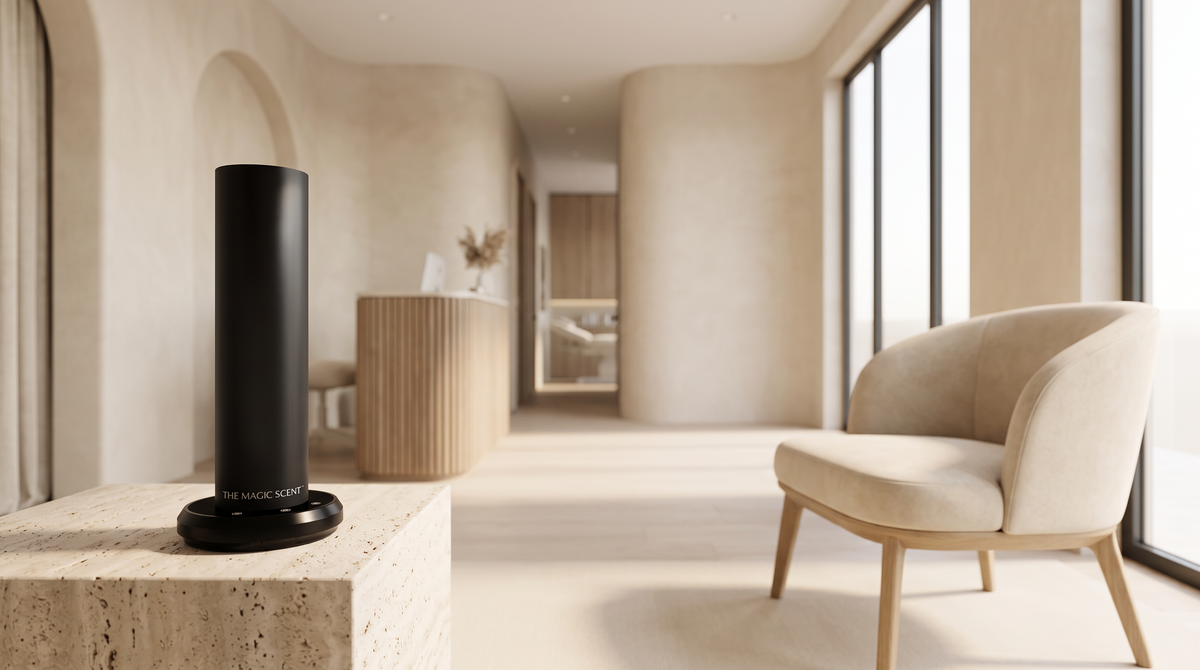
Medical and dental offices have specific practical constraints that rule out a lot of standard scenting options. Candles are a non-starter around oxygen equipment and flammable materials. Ultrasonic diffusers introduce water into an environment that's already carefully controlled for sterility. The Magic Scent's cold-air diffusers avoid both issues - no flame, no water, no residue - while still delivering a consistent, adjustable scent throughout the day across back-to-back patient visits.
Frequently Asked Questions
What's the best scent for a dental office waiting room?
Light, clean scents, citrus, white tea, or a soft green note, tend to work best. They reinforce a sense of cleanliness without competing with or masking the clinical smell of the practice.
Can scenting actually help with dental or medical anxiety?
Scent alone won't eliminate anxiety, but a calming, non-clinical ambient fragrance removes one of the subconscious triggers (the harsh antiseptic smell) that reinforces it, which can make the overall visit feel less stressful.
Is it safe to diffuse fragrance in a medical office?
Cold-air, waterless diffusion is generally well-suited to medical settings since it introduces no water, no heat, and no residue - important in an environment where sterility and equipment safety matter. As with any shared clinical space, intensity should stay low and any patient-specific sensitivities should be taken into account.
Should every room in the practice have the same scent?
Generally yes, for consistency in reception and hallway areas - but treatment rooms are often better left lightly scented or unscented, given closer patient proximity.