
Are Scent Diffusers Safe for Kids, Pets, and People with Allergies?
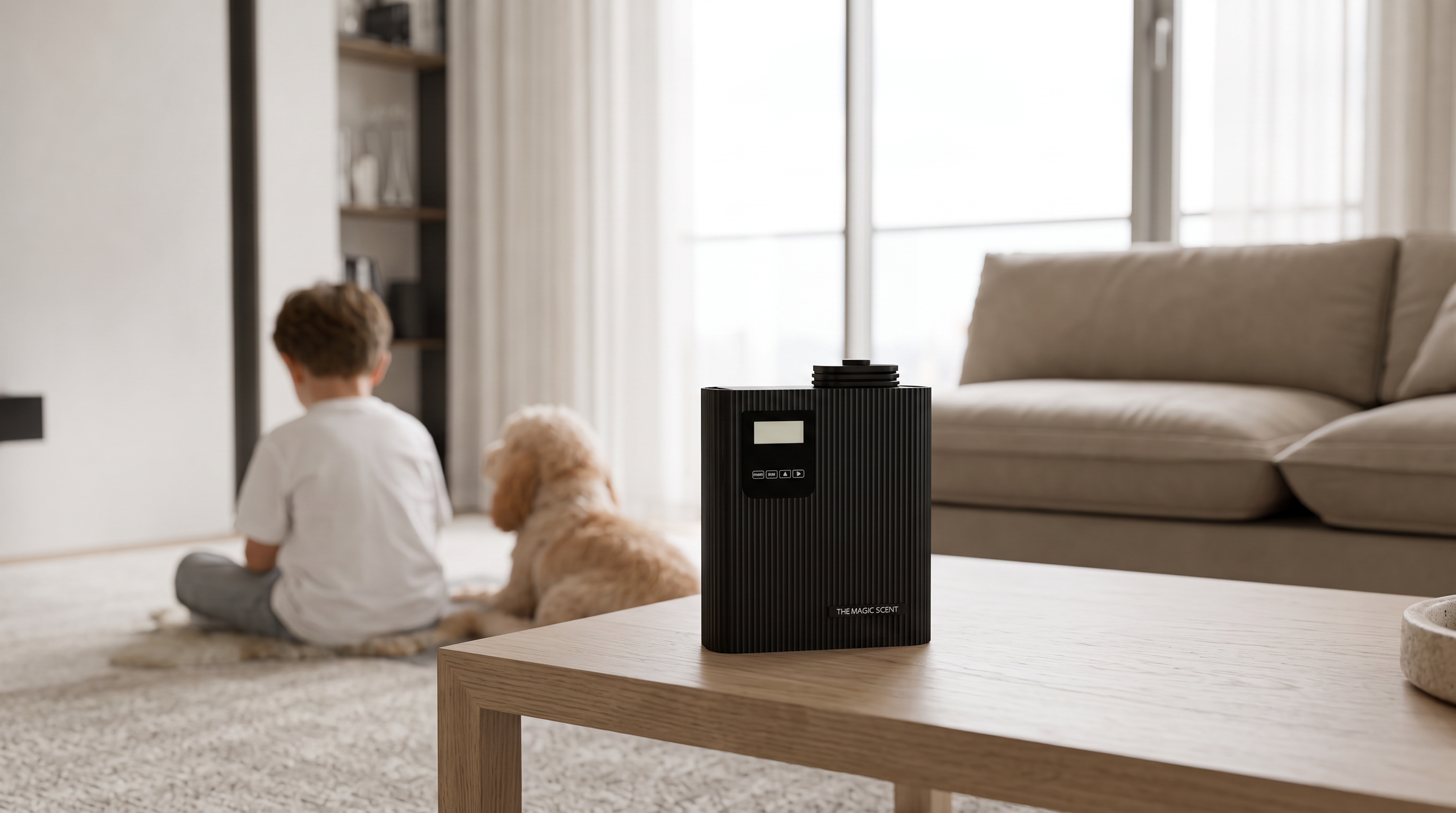
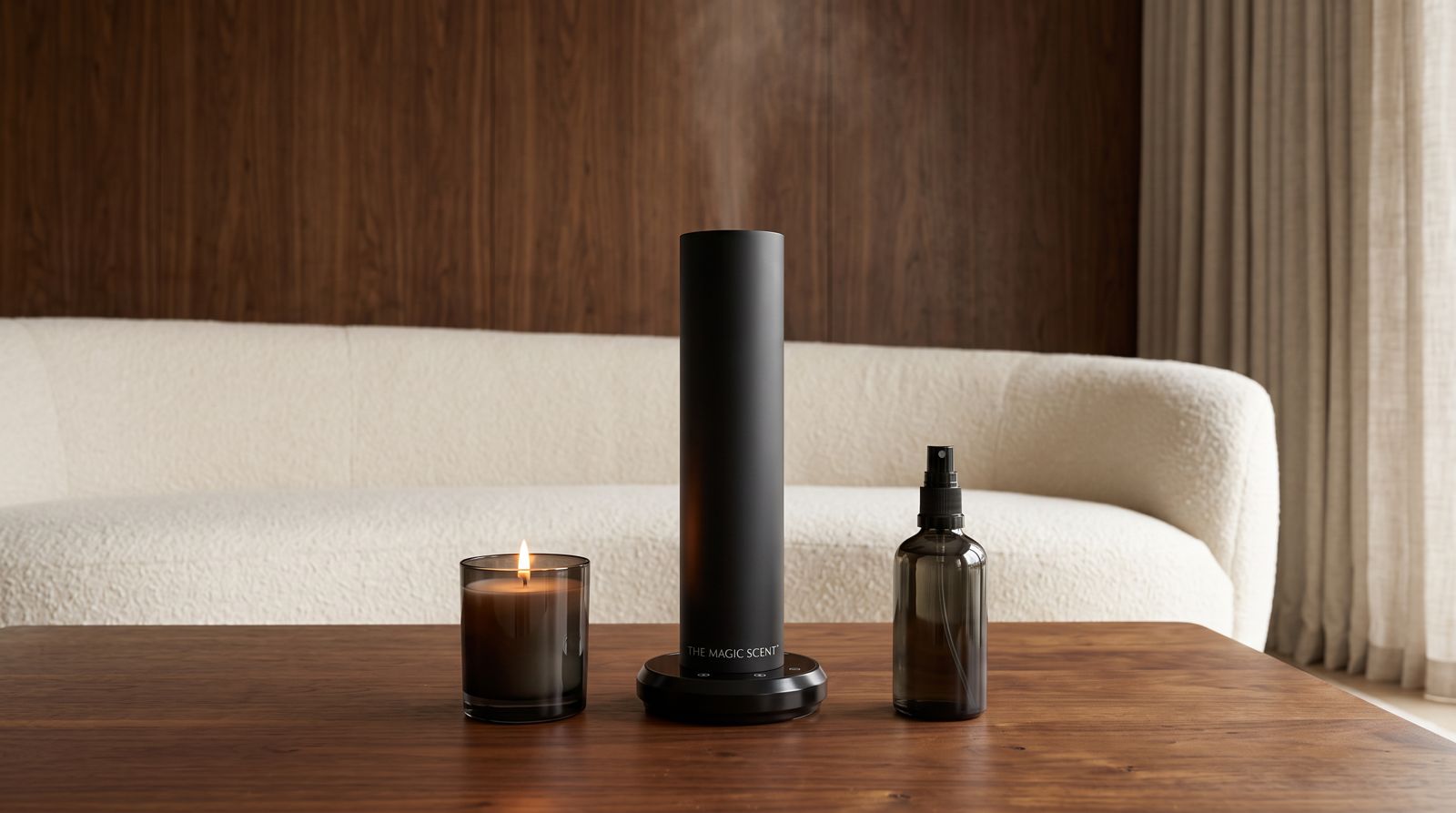
In general, yes - cold-air (waterless) diffusers are considered one of the safer ways to scent a home, because they use no heat, no water, and no combustion. There's no flame to worry about, no risk of spills or mold from standing water, and the fragrance oil is dispersed as a fine, dry mist rather than burned or heated. That said, “safe” still depends on a few factors: the quality of the fragrance oil, the concentration and placement of the diffuser, and any specific sensitivities a person, child, or pet may have. This guide breaks down what actually matters.
Why Heat-Free, Water-Free Diffusion Is Considered Lower-Risk?
Many common home fragrance methods carry risks that cold-air diffusion avoids entirely. Candles involve an open flame and combustion byproducts. Plug-in warmers heat fragrance oil, which can alter its chemical makeup and, in poorly ventilated rooms, allow scent to build up unevenly. Ultrasonic diffusers use water, which, if not cleaned regularly, can develop mold or bacteria in the reservoir. Cold-air nebulizing diffusers sidestep all three issues: no flame, no heating, no standing water. This is why the technology is standard in spaces where a broad range of people are present for extended periods, such as hotel lobbies and offices.
What “No VOCs” Actually Means?
VOCs (volatile organic compounds) are chemicals that can off-gas from certain synthetic fragrances, cleaning products, and building materials, and are one of the more commonly cited concerns around indoor air quality. Fragrance oils formulated without added VOCs avoid introducing these specific compounds into the air. It's a meaningful distinction worth checking for on any fragrance oil label - not just for diffusers, but for candles, sprays, and cleaning products generally.
A Note for Households With Kids
• Placement matters more than the diffuser type - keep any diffuser out of reach of small children, the same as any small appliance or electronics.
• Choose a diffuser with adjustable intensity and run it in well-ventilated rooms, especially nurseries or playrooms.
• As with any new fragrance product introduced around children, start with shorter run times and observe how the room feels before leaving it running for extended periods.
A Note for Households With Pets
• Cats in particular can be more sensitive to certain essential oils than humans or dogs, since their liver processes some compounds differently. If you have pets ,especially cats, it's worth choosing fragrance oils formulated to be pet-conscious, running the diffuser in a room pets can leave if they choose to, and avoiding placing it in a small, enclosed space like a crate area or a compact bathroom.
A Note for People With Allergies or Sensitivities
Fragrance sensitivity varies widely from person to person. Cold-air diffusion, because it doesn't dilute or heat-alter the oil, tends to produce a more consistent, predictable scent experience than methods that introduce moisture or combustion byproducts into the mix. Still, anyone with a known fragrance sensitivity or respiratory condition should start with lower intensity settings, ensure good airflow in the room, and discontinue use if they notice any irritation - the same guidance that applies to any home fragrance product.
How to Diffuse Responsibly, Regardless of Technology
• Use fragrance oils from a source that discloses ingredients and avoids added VOCs.
• Ventilate the room rather than sealing it completely, especially in smaller spaces.
• Match the diffuser's coverage size to the room - running an oversized unit in a small space concentrates fragrance more than necessary.
• Clean and maintain the diffuser as directed to keep it functioning as intended.
Frequently Asked Questions
Are cold-air diffusers safer than candles?
Cold-air diffusers avoid the open flame and combustion byproducts associated with candles, which is why they're generally considered a lower-risk option for continuous, everyday use in homes and businesses.
Can I use a scent diffuser around my baby or young children?
Many parents do, but it's best to keep the diffuser out of reach, run it in a well-ventilated room, and choose a fragrance oil formulated without added VOCs. If you have any concerns specific to your child, it's worth checking with your pediatrician.
Are essential oil diffusers safe for cats?
Cats can be more sensitive to certain essential oils than other pets. If you have cats, look for pet-conscious fragrance formulations, ensure the room is ventilated, and give your cat the ability to leave the room if they choose.
What does “no VOCs” mean on a fragrance oil label?
It means the product hasn't been formulated with added volatile organic compounds - chemicals commonly cited as a concern for indoor air quality - which is generally considered a cleaner option for continuous home diffusion.




%20diffusers%20are%20considered%20one%20of%20the%20safer%20ways%20to%20scent%20a%C2%A0home,%20because%20they%20use%20no%20heat,%20no%20water,%20and%20no%20combustion.%20There's%20no%20flame%20to%20worry%20about,%C2%A0no%20ris...)