Does Scent Really Help Sell Real Estate?
Does Scent Really Help Sell Real Estate?
Yes. Scent is processed directly by the brain's limbic system - the same region responsible for memory and emotion - which means a well-chosen fragrance can measurably shorten the time buyers spend “deciding” and increase how positively they rate a property. Real estate professionals who use a consistent, high-quality scent in model homes and open houses report higher buyer engagement, longer walkthrough times, and stronger emotional recall of the property days later. The right scent doesn't just make a house smell nice - it changes how a buyer feels about the space, which is often the deciding factor between two comparable listings.
Why Scent Matters More in Real Estate Than in Almost Any Other
Industry
When someone walks into a model home or an open house, they're not just evaluating square footage, finishes, and layout. They're asking themselves, often without realizing it, a much simpler question: could I see myself living here? That question gets answered emotionally before it's answered rationally. Vision and hearing pass through several relay points in the brain before reaching areas tied to emotion and memory. Smell takes a more direct route, connecting almost immediately to the limbic system - which is why a specific scent can instantly transport someone back to a childhood home or a place they can't quite name but feel deeply familiar with. A staged home can look flawless in photos and still fail to create an emotional pull in person. Scent fills that gap, signaling warmth, cleanliness, and care in a way that staging furniture alone cannot.
What the Research Says About Scent and Buyer Behavior
Environmental psychology research consistently shows that ambient scent influences how long people stay in a space and how favorably they rate it. In retail environments, studies have found that pleasant ambient scent can increase browsing time and improve a shopper's overall evaluation of the store - the same underlying psychology applies to a model home: a buyer who lingers longer has more time to notice the details an agent wants them to notice, from natural light to the flow between rooms. Scent also plays a well-documented role in perceived trustworthines and comfort. A space that smells neutral, stale, or of nothing at all can read as unfinished or unloved, even when the staging is otherwise perfect, while an unpleasant or overly strong scent can create a subconscious sense of something being “off.” In short: the absence of a scentstrategy is still a scent strategy - and it's rarely the one that wins deals.
Which Scents Actually Work for Model Homes and Open Houses
Not every fragrance belongs in a real estate context. The goal isn't to create a strong, memorable “brand scent” the way a hotel or retail store might - it's to create an atmosphere so clean and inviting that buyers barely notice the scent consciously, but feel its effect emotionally.
Fresh & Clean (Linen, Cotton, Light Citrus)
Signals cleanliness and move-in readiness. Ideal for entryways and living areas.
Warm & Woody (Sandalwood, Cedar, Subtle Vanilla)
Creates a cozy, “lived-in” feeling without being overpowering. Works well in living rooms and bedrooms.
Soft Floral (White Tea, Light Jasmine)
Adds a refined, upscale note. Best for higher-end listings and primary suites.
Baked or Gourmand Notes (In Very Light Doses)
The classic “fresh baked cookies” trick works because it taps into comfort and home - modern buyers respond just as well to a lighter bakery-adjacent note without literally baking anything.
Scents to Avoid
Heavy florals, strong vanilla, anything reminiscent of air freshener, and anything a buyer might associate with covering up a problem - smoke, pets, mildew. If a scent is strong enough to notice from the driveway, it's too strong.
Scenting an Entire Property vs. a Single Room
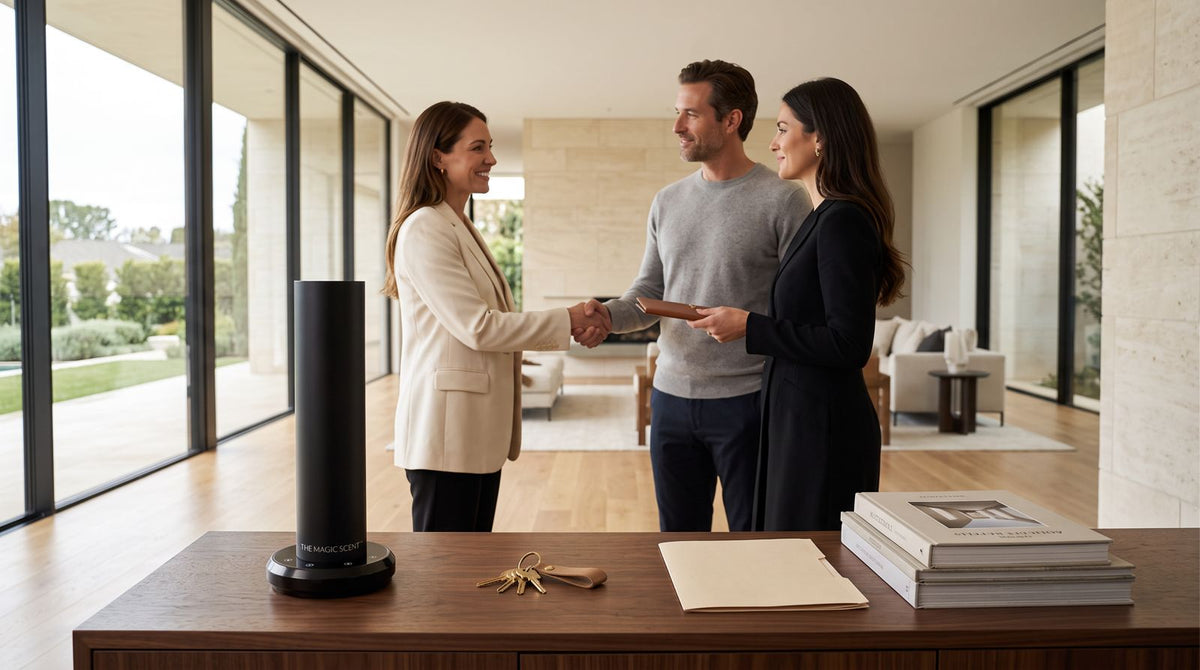
One of the most common mistakes in real estate scenting is inconsistency - a strong candle in the kitchen, nothing in the bedrooms, and a plug-in air freshener in the bathroom that clashes with everything else. Buyers notice inconsistency, even subconsciously, and it undercuts the sense of a cohesive, well-cared-for home. For a single model home or a smaller open house, a portable cold-air diffuser placed centrally, often near the entry or main living area, is usually enough to create a consistent scent throughout the walkthrough without any single room smelling “scented.” For larger properties, multiple model homes on one site, or developers managing several open houses simultaneously, a whole-home or multi-zone diffuser system creates that same consistent experience across every unit, which matters when buyers are comparing floor plans side by side.
How The Magic Scent Supports Real Estate Professionals
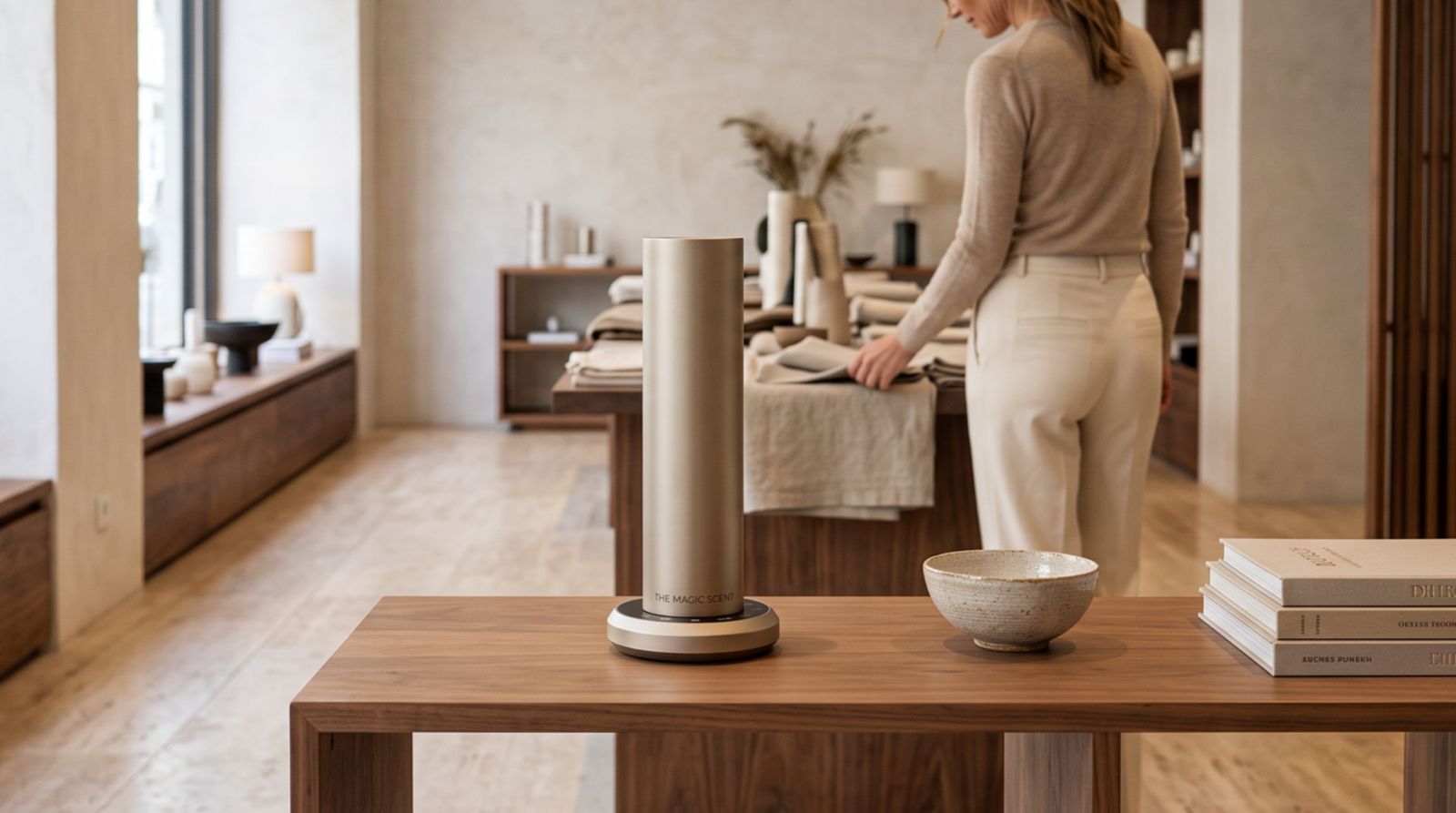
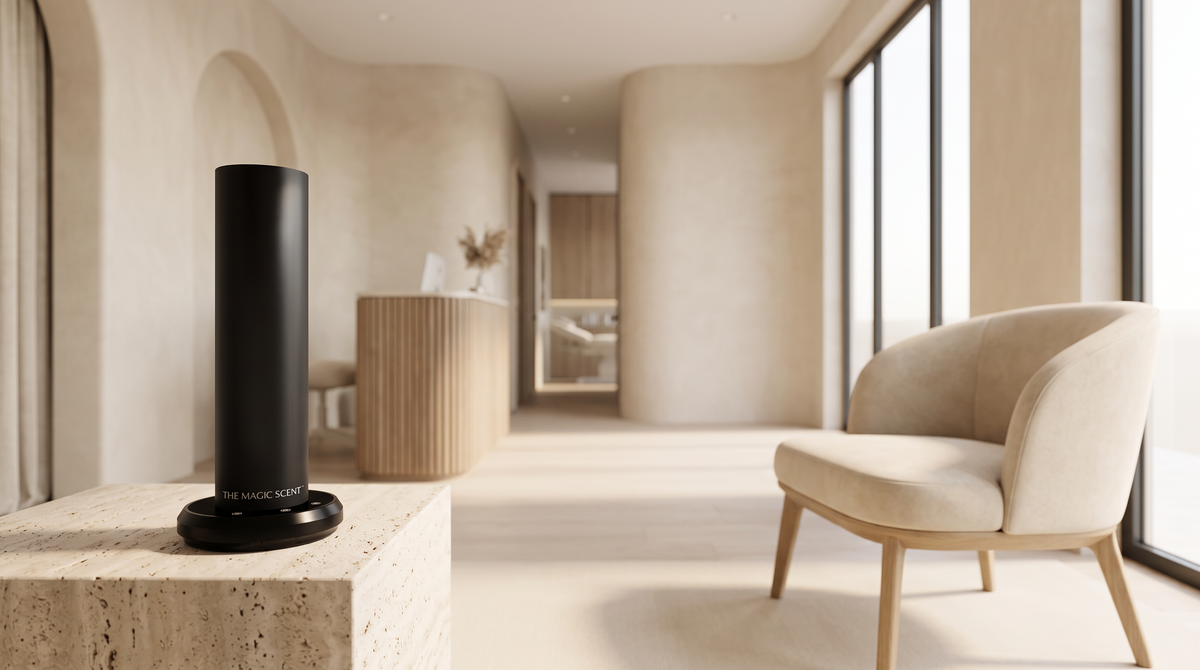
The Magic Scent's cold-air diffusers are built specifically for the kind of controlled, professional scenting that real estate staging requires. Unlike heat-based diffusers or candles, cold-air diffusion uses no water and no heat, which means:
• No risk of leaving a wax stain, water ring, or residue on staged furniture or surfaces
• No open flame, which matters for insurance and liability during showings
• Precise, adjustable intensity, so the scent can be dialed to “barely there” rather than overwhelming
• Consistent output for hours at a time, ideal for back-to-back showings or weekend-long open houses
Scaling Across Multiple Listings
For agents and developers managing multiple properties, The Magic Scent's whole-home and commercial systems allow the same signature scent to be reproduced consistently across every listing - creating a subtle but recognizable brand experience for repeat buyers or referral clients.
Frequently Asked Questions
Does scent actually help sell a house faster?
There's no guarantee scent alone will close a deal, but it removes a subconscious barrier - a stale, neutral, or unpleasant-smelling space — and reinforces the emotional response staging is designed to create. Combined with strong staging and photography, scent is one more lever working in the buyer's favor rather than against it.
What's the biggest mistake agents make with scent?
Going too strong. A scent that's noticeable the moment someone walks in the door often reads as an attempt to mask a problem, which can backfire. The goal is a scent buyers feel more than they consciously smell.
Can I just use scented candles instead of a diffuser?
Candles work for very short showings but come with drawbacks: open flame liability, uneven scent distribution, and the risk of leaving wax residue on staged surfaces. A cold-air diffuser solves all three while giving more consistent, adjustable coverage.
Should every room have the same scent?
Generally, yes, for consistency - though many professionals use a slightly lighter version of the same scent in bedrooms and a fuller version in main living areas. What you want to avoid is competing or clashing scents in different rooms.
Is scent marketing worth it for a single open house, or only for ongoing developments?
Even a single open house benefits, since the emotional response happens in the moment. But the ROI compounds for developers and agents scenting multiple properties or repeat showings, where a consistent scent becomes part of the overall brand experience.